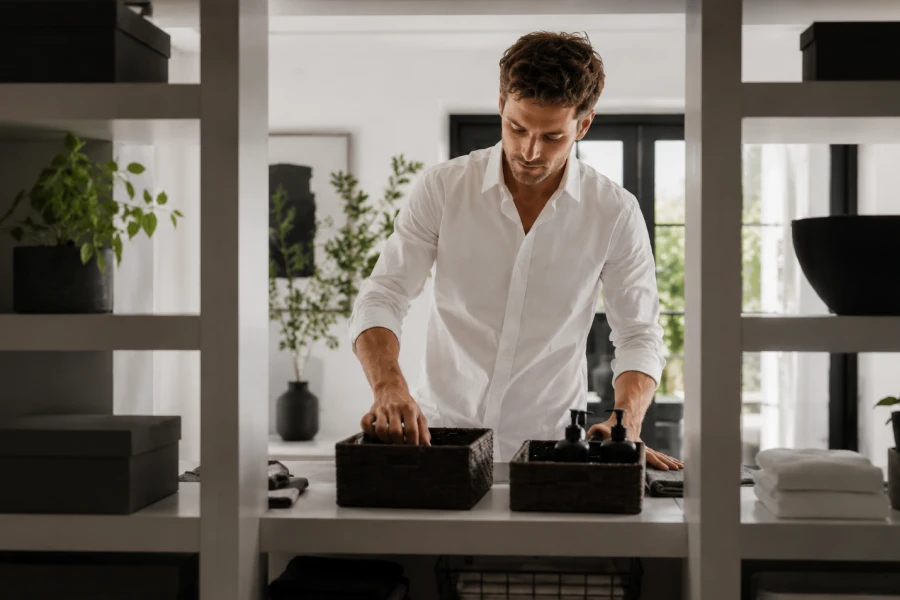
Smart home organization ideas work best when they solve daily friction. They are not just attractive bins or matching labels. They are small design decisions that make life easier. A strong system helps you find things quickly. It also helps you put them away without thinking. That second part matters most. If storage is inconvenient, clutter returns. If storage matches your behavior, the home stays calmer. The right ideas can make ordinary rooms feel more spacious, polished, and peaceful without requiring a full renovation.
Categories make storage logical. Group items by how you use them, not just what they are. Keep coffee supplies near the coffee maker. Store school papers near the command center. Keep cleaning supplies near the rooms they serve. This creates an easier path from need to action. It also supports organized home systems that work without constant reminders. When categories are clear, everyone understands the home faster. Items return to their places more naturally. The system becomes shared, not personal.
Walls can solve storage problems, but they can also create visual noise. Use vertical space for items that deserve easy access. Add hooks for bags, hats, or kitchen tools. Install shelves for edited categories, not overflow. Use tall cabinets when floor space is limited. Keep heavier items at comfortable heights. Avoid turning every wall into storage. The room still needs quiet areas. Vertical storage works best when it creates breathing room below. That balance makes small spaces feel more organized and open.
High-traffic zones need the most practical systems. Entryways, kitchens, bathrooms, and laundry areas collect clutter fast. Start with the place that frustrates you most. Add one solution that removes the recurring problem. A shoe basket may fix the entry. A turntable may fix the pantry. A divided drawer may fix bathroom clutter. This is where decluttering and organization tips become immediately visible. You feel the improvement every day. That quick reward builds momentum for other rooms.
Storage should match how often you use an item. Daily essentials need the easiest access. Weekly items can sit behind doors or in lower bins. Rare items can move higher, deeper, or farther away. This simple hierarchy prevents frustration. It also keeps prime spaces from becoming crowded. Do not waste the best drawer on items you rarely touch. Reserve convenient areas for active life. When storage follows frequency, tidying feels natural. You spend less time searching. You also spend less time rearranging the same objects.
Even the smartest system struggles with too much stuff. Editing keeps storage functional. Remove duplicates from crowded categories. Let go of expired, broken, or unwanted items. Keep only what supports your current life. This gives your practical home design plan room to work. It also prevents containers from becoming clutter warehouses. Organization should reveal what matters. It should not hide every delayed decision. Editing makes the home feel lighter before any new storage arrives.
Once a system works, repeat the logic elsewhere. A tray that controls mail can also control nightstand items. A divided bin that helps the pantry can help bathroom supplies. A hook rail that organizes bags can organize robes or cleaning tools. Repetition makes the home easier to understand. It also creates visual consistency. You do not need a different solution for every room. You need a few reliable patterns. The best homes feel organized because their systems are simple, repeated, and easy to maintain.

Leave a comment