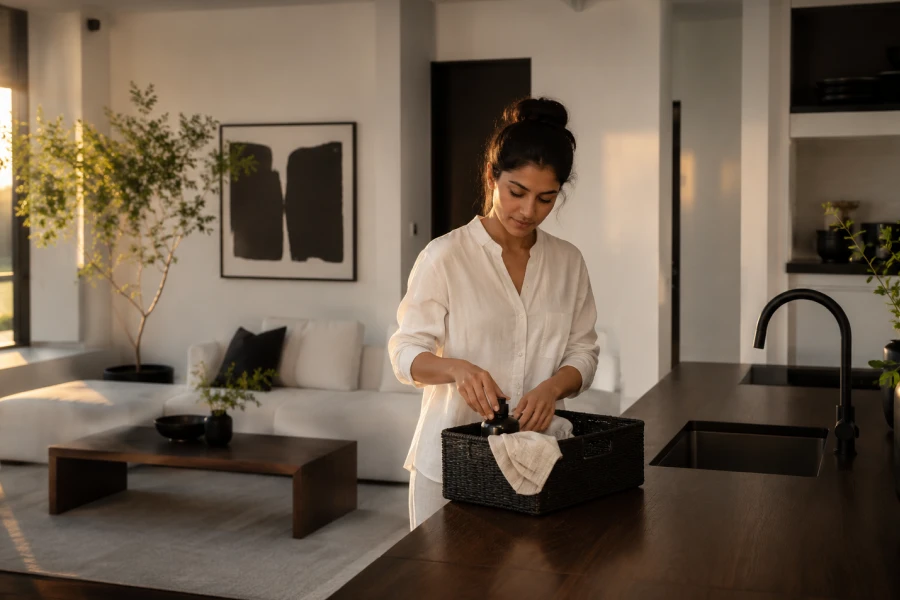
A stress free cleaning routine works because it respects your real life. It does not demand perfect mornings or empty weekends. It gives you repeatable actions that fit between work, meals, errands, and rest. Many people avoid cleaning because the task feels endless. That feeling creates stress before anything begins. A better system makes cleaning smaller. It turns maintenance into rhythm. Your home becomes easier to manage. Your mind feels less crowded. The routine succeeds because it lowers pressure instead of adding another unrealistic standard.
Not every task deserves the same attention every day. Clear surfaces affect mood quickly. Dishes affect the kitchen immediately. Laundry affects mornings and bedtime. Dusting may matter less during a packed week. Choose the tasks that create the biggest sense of relief. This is where busy person cleaning plan thinking becomes useful. You focus on impact instead of guilt. That keeps the routine efficient. It also prevents cleaning from taking over your schedule. Priorities make the whole system feel kinder.
Tidying and cleaning are different jobs. Tidying returns items to their homes. Cleaning removes dust, spills, crumbs, and grime. Mixing them can make every task feel bigger. Start by tidying the visible clutter. Then clean only the surface that needs attention. This simple separation reduces overwhelm. It also helps you finish faster. A clear counter takes seconds to wipe. A cluttered counter can steal ten minutes. When you separate the jobs, progress becomes visible. Visible progress keeps motivation alive without forcing a long session.
Short time blocks prevent cleaning from expanding. Try five minutes after breakfast. Try ten minutes before dinner. Try one focused reset before bed. The exact schedule matters less than consistency. Small blocks are easier to protect. They also make tasks feel less dramatic. A good home maintenance system uses small actions often. It does not wait for chaos. That rhythm keeps your home steady. It also gives you more freedom on weekends.
Cleaning becomes easier when supplies live near the mess. Keep bathroom wipes under the sink. Store a small broom near the kitchen. Place laundry supplies where sorting happens. Use a caddy for shared supplies if storage is limited. This removes the barrier of searching. It also makes quick action more likely. You can wipe a mirror in thirty seconds. You can sweep crumbs before they spread. Convenience turns cleaning into a response, not a project. That shift makes the routine feel natural.
Stopping is part of the system. Without a stopping point, cleaning becomes exhausting. Decide what finished means before you begin. Maybe the kitchen reset ends when dishes are loaded. Maybe the bedroom reset ends when clothes leave the floor. A clear finish line supports easy tidy home strategy routines. It prevents one task from becoming five. It also protects your energy. You should feel accomplished, not drained. Sustainable cleaning needs permission to end.
A routine becomes calming when it feels familiar. At first, you may need reminders. Soon, the actions become automatic. You notice dishes before they pile up. You reset surfaces before clutter spreads. You put items away because their homes are clear. This creates confidence. The home no longer feels unpredictable. You know what to do when mess appears. That confidence matters more than perfection. A busy home will always need care. The right routine makes that care feel manageable, steady, and much less stressful.

Leave a comment