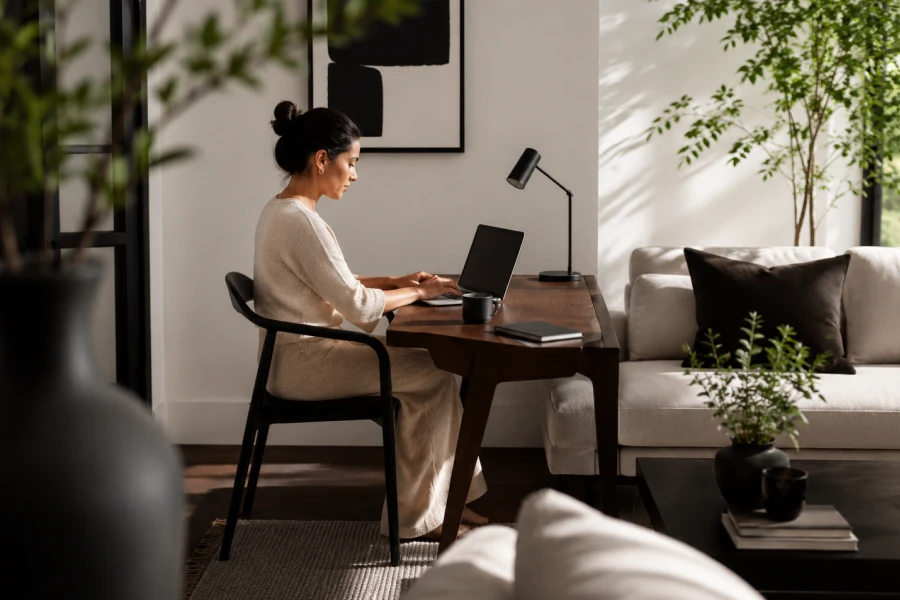
A practical work from home living room setup helps your day feel less scattered. The living room is often the most comfortable area in the home. That makes it tempting for work. It also makes boundaries harder. You need a setup that supports focus without ruining relaxation. The best approach feels simple, warm, and easy to reset. It does not require a spare room. It does require thoughtful choices. Your desk, chair, lighting, and storage should work together. When they do, your living room can support both productivity and rest.
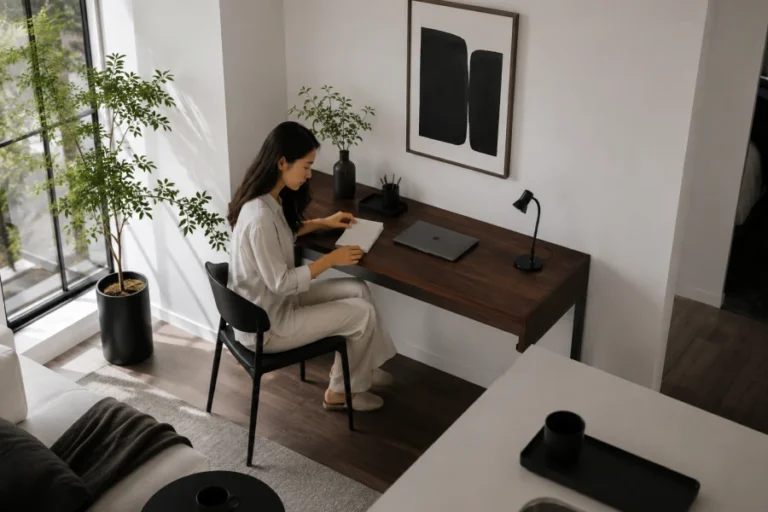
Positioning affects focus more than many people expect. A desk facing a wall can reduce distraction. A desk near a window can improve energy. A desk behind a sofa can create a subtle zone. The best placement depends on your room shape. Avoid blocking walkways or natural conversation areas. That keeps the living room functional for everyone. A careful small space productivity setup respects movement first. It then adds comfort and style. Good placement makes the room feel larger, not busier.
You do not always need a physical divider. A rug, lamp, plant, or shelving unit can define the work zone. These elements create separation without shrinking the room. A low cabinet can hide supplies while adding structure. A curtain can soften a corner when privacy matters. Even artwork above the desk can create a visual boundary. The key is subtlety. You want the work area to belong. You do not want it to feel boxed in. Soft separation keeps the room open while helping your mind switch modes.
Comfort should not be sacrificed because the room is shared. Your chair should support real working hours. Your screen should sit near eye level. Your keyboard and mouse should not strain your shoulders. These details protect your body during long days. They also improve attention. A beautiful but uncomfortable setup will not last. Look for ergonomic home office ideas that blend with your decor. A cushion, footrest, or laptop riser can make a major difference. Small adjustments often solve daily fatigue.
Video calls make the living room visible in new ways. A calm background can help you feel more prepared. Keep shelves edited. Move laundry, toys, and loose papers out of frame. Place a lamp or plant behind you for depth. Avoid sitting with bright windows directly behind your head. A polished background does not need to look staged. It simply needs to feel tidy and intentional. This makes calls easier. It also encourages a cleaner room overall. When the background works, your workspace feels more professional.
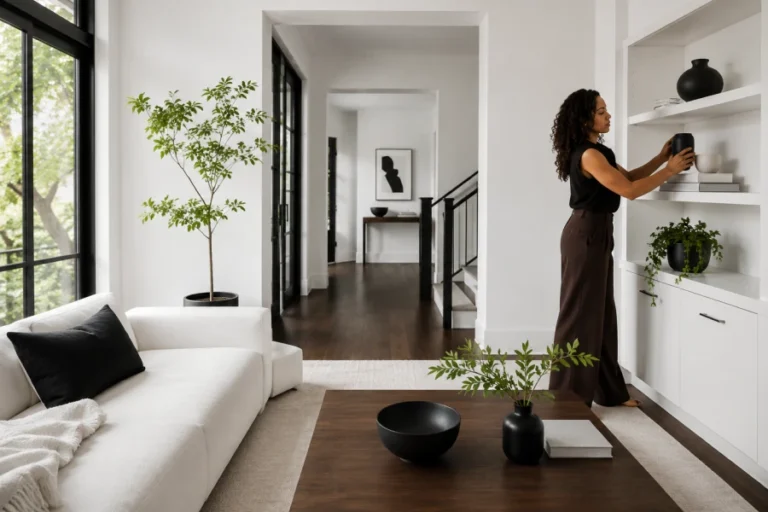
The reset matters as much as the work session. Choose tools that can close, fold, stack, or disappear. Put a basket near the desk for quick storage. Keep a charging station inside one drawer. Store notebooks upright in a magazine file. These habits support flexible living room workspace planning. They also make the room feel calm after work. The easier the reset, the more likely you will do it. That consistency protects your evening routine.
Your living room may host work, guests, family time, meals, and quiet evenings. The setup should respect all of those uses. Keep the workstation compact but not cramped. Choose colors that blend with your room. Avoid buying too many organizers before testing your habits. Try the arrangement for one week. Notice what feels smooth. Notice what causes friction. Then adjust with purpose. A real-life setup grows through use. It should make work easier while letting home remain home.

Leave a comment